Suseum (Sustainability Museum) is India’s first dedicated museum for renewable energy, clean technology, and eco-friendly lifestyles. Launched by Energy Alternatives India (EAI), a clean-tech research and consulting firm founded by IIT and IIM alumni, it is located on Nungambakkam High Road in Chennai.
Rather than focusing on ancient history, Suseum is designed as a forward-looking, interactive space focused on environmental survival and ecological balance.
The Vision
The core objective of Suseum is to bridge the gap between complex environmental science and everyday human life. By presenting sustainability in practical, tangible ways, it serves as an educational hub for students, researchers, and citizens looking to understand how modern engineering must align with nature to preserve the future.
The Brains Behind the Initiative
- Founded by IIT & IIM Alumni: EAI was established by a team of premier technical and management professionals dedicated to accelerating the adoption of renewable energy and clean technology across India.
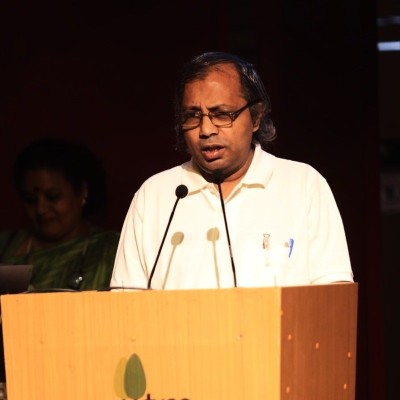
- The Visionary: The primary driving force behind Suseum is Narasimhan Santhanam (Narsi), the co-founder and director of EAI. An alumnus of IIT Madras (B.Tech) and IIM Calcutta (PGDM), Santhanam is a prominent climate-tech and renewable energy expert.
The History and Evolution
- 2013 Launch: Suseum was officially inaugurated in November 2013 on Nungambakkam High Road, Chennai, earning the distinction of being India’s very first dedicated sustainability museum.
- The “Why”: Before Suseum, information on clean technology was heavily restricted to corporate boardrooms, technical journals, and academic papers. The founders realized there was a severe gap between complex environmental science and practical, everyday adoption by the public.
- From Office to Innovation Hub: To bridge this gap, EAI creatively converted a section of its own workspace into a physical, public-accessible museum. The goal was to build a philanthropic, interactive space where students, citizens, and small business owners could see, touch, and feel real-world eco-friendly applications rather than just reading about them.
- Expanding Ecosystem: Over the years, the history of Suseum has aligned with EAI’s broader initiatives to foster green talent and entrepreneurship, serving as a launchpad for climate-tech internships, educational workshops for school children, and a specialized eco-store showcasing commercial sustainable alternatives.
Key Highlights & Exhibits
- Hands-On Clean Tech: Visitors can see and touch advanced green technologies, such as vertical-axis wind turbines, solar innovations, and flywheel energy storage systems.
- Urban Gardening Solutions: The museum showcases practical urban greening concepts, including vertical gardens, which demonstrate how dense city spaces can be engineered to support plant life and reduce heat.
- Eco-Friendly Alternatives: Displays feature daily-use sustainable products, ranging from compostable plastic cups to biodegradable materials, illustrating how consumers can reduce their carbon footprint.
- The Suseum Store: A dedicated space where visitors can directly purchase eco-friendly products and find sustainable solution providers for homes or institutions.
Botanical relations
When we look at the clean-tech and sustainability solutions showcased at Suseum, they are essentially humans trying to copy what plants have been doing flawlessly for millions of years.
- Solar Energy Capture vs. Photosynthesis
Suseum heavily features advanced solar photovoltaic (PV) technologies, demonstrating how humans can harvest sunlight to generate electricity.
The Botanical Connection: Solar panels are nothing more than a mechanical, less efficient imitation of a leaf’s chloroplasts. While human engineers use silicon wafers to induce an electron flow from sunlight, plants use chlorophyll pigments to achieve quantum efficiency in splitting water molecules and capturing photons.
The Future: Advanced clean-tech research (like dye-sensitized solar cells) actively copies plant pigments to create organic solar cells.
- Vertical Gardens as Urban Ecosystems
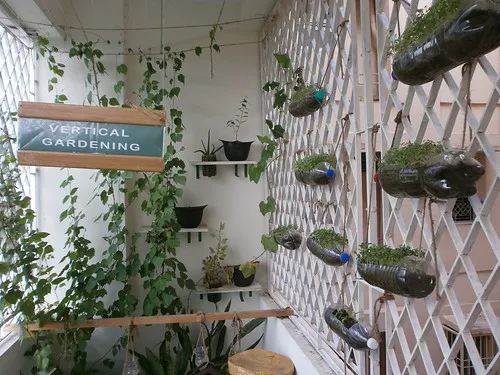
One of the key practical exhibits at Suseum focuses on urban greening solutions, particularly vertical gardens and living walls for dense city spaces.
- The Botanical Connection: This relies heavily on understanding epiphytic plants (plants that grow on other structures without soil, like certain ferns and orchids) and their root physiology.
- Botanical Engineering: To design a sustainable vertical garden, one must understand how plant roots anchor, how they absorb moisture through specialized tissues (like velamen in orchids), and how different species interact to purify the air, reduce urban heat islands, and trap heavy metals.
3. Biodegradable Materials and Plant Polymers
The eco-store and material exhibits at Suseum showcase compostable plastics, plant-based packaging, and biodegradable consumer goods.
- The Botanical Connection: This is entirely rooted in plant biochemistry. Instead of using fossil-fuel-based hydrocarbons, these materials are engineered using plant polymers like cellulose, hemicellulose, and lignin (the structural components of plant cell walls) or starches extracted from corn and cassava.
- The Lifecycle: Understanding how microorganisms enzymatically break down these botanical bonds back into organic soil nutrients is what makes these products truly sustainable
4. Phytoremediation and Waste Treatment
Clean technology often involves eco-friendly ways to treat greywater and industrial waste without harsh chemicals.
- The Botanical Connection: This introduces phytoremediation—the use of specific living plants to clean up contaminated soil and water. For example, using water hyacinths or specific reeds in constructed wetlands to absorb toxins, heavy metals, and excess nitrates through their root systems.
Bridging the Gap
- Academic Botany to Applied Green-Tech
In the classroom, you study plant anatomy, physiology, and biochemistry in detail. Suseum takes those exact concepts and showcases their real-world commercial applications.
- From Stomata to Architecture: Understanding how a plant regulates water loss and gas exchange through stomata helps you design passive cooling systems for buildings using green walls.
- From Plant Biochemistry to Materials Science: Your knowledge of plant cell walls, starch, and cellulose is exactly what industries need to engineer the next generation of bioplastics and compostable packaging materials shown at Suseum.
2. Opening Frontiers in Biomimicry and Bio-Design
The future of engineering is biomimicry—solving human problems by copying nature’s designs. Because plants are stationary, they have evolved the most sophisticated structural and energy-harvesting mechanisms on Earth.
- As a botanist, you understand how leaves optimize light absorption at different angles. Clean-tech companies need this expertise to build tracking solar panels that mimic heliotropism (sun-following movements in plants like sunflowers).
- You understand how lotus leaves stay clean via the microscopic structural architecture of their surface (the Lotus Effect). This is used to engineer self-cleaning solar panels and water-repellent paint.
3. Career Opportunities in Urban Agriculture & Phytoremediation
As cities grow denser and more polluted, traditional botany is moving into urban landscapes. Places like Suseum emphasize urban greening, vertical farming, and non-chemical waste treatment.
- Hydroponics and Aeroponics: Future botanists will be the core architects of vertical farms, managing nutrient solutions, light wavelengths, and plant pathology without soil.
- Phytoremediation Experts: Industries and municipalities increasingly look for botanists who can select and engineer specific plant species (like hyperaccumulators) to clean up heavy metal soil pollution and industrial greywater naturally.
4. Driving the Bio-Economy and Sustainable Entrepreneurship
The global shift away from fossil fuels means that plants are the new oil. Everything currently made from petroleum (plastics, fuel, synthetic fibers) will eventually need to be made from plant-based alternatives.
- A botany student who understands sustainability trends can enter fields like Biofuels (algal and agricultural biomass energy), Ethnobotanical product formulation, and Green Supply Chain consulting.
- It prepares you to be a consultant for environmental impact assessments, carbon sequestration auditing, and eco-restoration projects.
Suseum shifts Botany from a purely academic, lab-based, or field-classification science into an active, high-demand field of applied ecological engineering.
Suseum demonstrates that true sustainability is not about human engineering overpowering nature, but rather human engineering submitting to botanical wisdom. Every clean energy device we build is just a step closer to replicating a plant’s natural metabolic processes.